· 7 min read
The State of Personal Finance in India: Why Managing Money Has Never Been More Important
India is witnessing one of the most significant financial transformations in its history.
Over the last decade, digital payments, UPI, online banking, investment apps, mutual funds, credit cards, BNPL services, and instant loans have become a part of everyday life. Today, millions of Indians can send money, invest, borrow, insure themselves, and make purchases with just a few taps on their smartphones.
Yet, despite this financial revolution, one fundamental problem remains unresolved:
Most Indians still do not have a clear understanding of their own finances.
India Has Made Transactions Easy
India has become one of the world's leading digital payment economies.
UPI processes billions of transactions every month. Digital payments have become second nature for urban consumers and are rapidly expanding into smaller cities and towns.
Making a payment today is easier than ever:
- Scan a QR code
- Tap a card
- Use a banking app
- Set up auto-pay
- Subscribe online
Money moves instantly.
However, while payments have become frictionless, tracking and understanding those payments has become increasingly difficult.
The Growing Complexity of Personal Finance
Twenty years ago, an average household managed finances through a single salary account, limited cash spending, fixed deposits, and basic insurance.
Today's financial life looks very different. A typical working professional may have:
- Multiple bank accounts
- UPI transactions across several apps
- Credit cards from multiple banks
- EMI obligations
- SIP investments
- Insurance premiums
- OTT subscriptions
- Utility auto-payments
- Online shopping expenses
- Travel bookings
- Loan repayments
Money now flows through dozens of channels every month. The result is simple:
People know their bank balance but often do not know where their money actually goes.
The Financial Literacy Gap
Financial literacy in India continues to lag behind the rapid adoption of financial products. Regulatory and educational initiatives consistently highlight the importance of budgeting, understanding income versus expenditure, planning investments, and avoiding financial mistakes through better financial awareness.
Many people:
- Save without a plan
- Invest without clear goals
- Take loans without understanding their long-term impact
- Ignore recurring expenses
- Fail to track spending patterns
As financial products become more sophisticated, managing personal finances becomes more important than ever.
The Hidden Problem: Financial Blind Spots
The biggest challenge in Indian personal finance today is not lack of income. It is lack of visibility.
Many individuals cannot answer basic questions such as:
- How much did I spend on food last month?
- What percentage of my income goes toward EMIs?
- How much am I spending on subscriptions?
- Has my discretionary spending increased this year?
- How much did I spend through UPI versus cards?
Without visibility, financial planning becomes guesswork. People often discover overspending only after their account balance starts shrinking.
Investing Is Growing, But Awareness Is Not Growing Equally
India's investment culture is changing rapidly. SIP participation and mutual fund investments have grown significantly over the last few years, and retail participation in financial markets continues to increase. However, investment penetration remains relatively low compared to India's population, and complexity, lack of information, and fear of loss continue to be major barriers.
A concerning trend is that many people believe that simply starting a SIP automatically solves their financial future. It does not.
Financial experts repeatedly point out that investing without understanding cash flow, spending behavior, debt levels, and financial goals often leads to poor outcomes. SIPs are a tool — not a complete financial plan.
The Missing Layer in India's Financial Ecosystem
India has built excellent systems for payments, banking, lending, investing, and insurance. But one critical layer remains underdeveloped:
Financial Awareness
Most financial platforms focus on helping users spend money, borrow money, or invest money. Very few help users understand their money.
People need answers before they need products. Questions such as:
- Where is my money going?
- What are my spending habits?
- What expenses are increasing?
- What can I optimize?
- How much am I saving every month?
…remain surprisingly difficult to answer.
Why Expense Tracking Matters
Expense tracking is often misunderstood as an activity for people trying to save money. In reality, expense tracking is the foundation of financial intelligence.
When individuals consistently understand their income, expenses, savings, liabilities, and spending patterns, they make better decisions across every aspect of personal finance.
Better expense tracking leads to:
- Better budgeting
- Smarter investments
- Reduced unnecessary spending
- Improved savings discipline
- Lower financial stress
- Faster achievement of financial goals
The Future of Personal Finance in India
The future of personal finance is not just about making transactions easier. India has already solved that problem.
The next phase of financial innovation will focus on helping individuals understand and optimize their financial lives. Future financial platforms will move beyond showing balances and transactions. They will provide:
- Spending intelligence
- Behavioral insights
- Personalized recommendations
- Financial forecasting
- Goal tracking
- Automated financial health monitoring
In short, they will help people become more financially aware.
Why Inly Exists
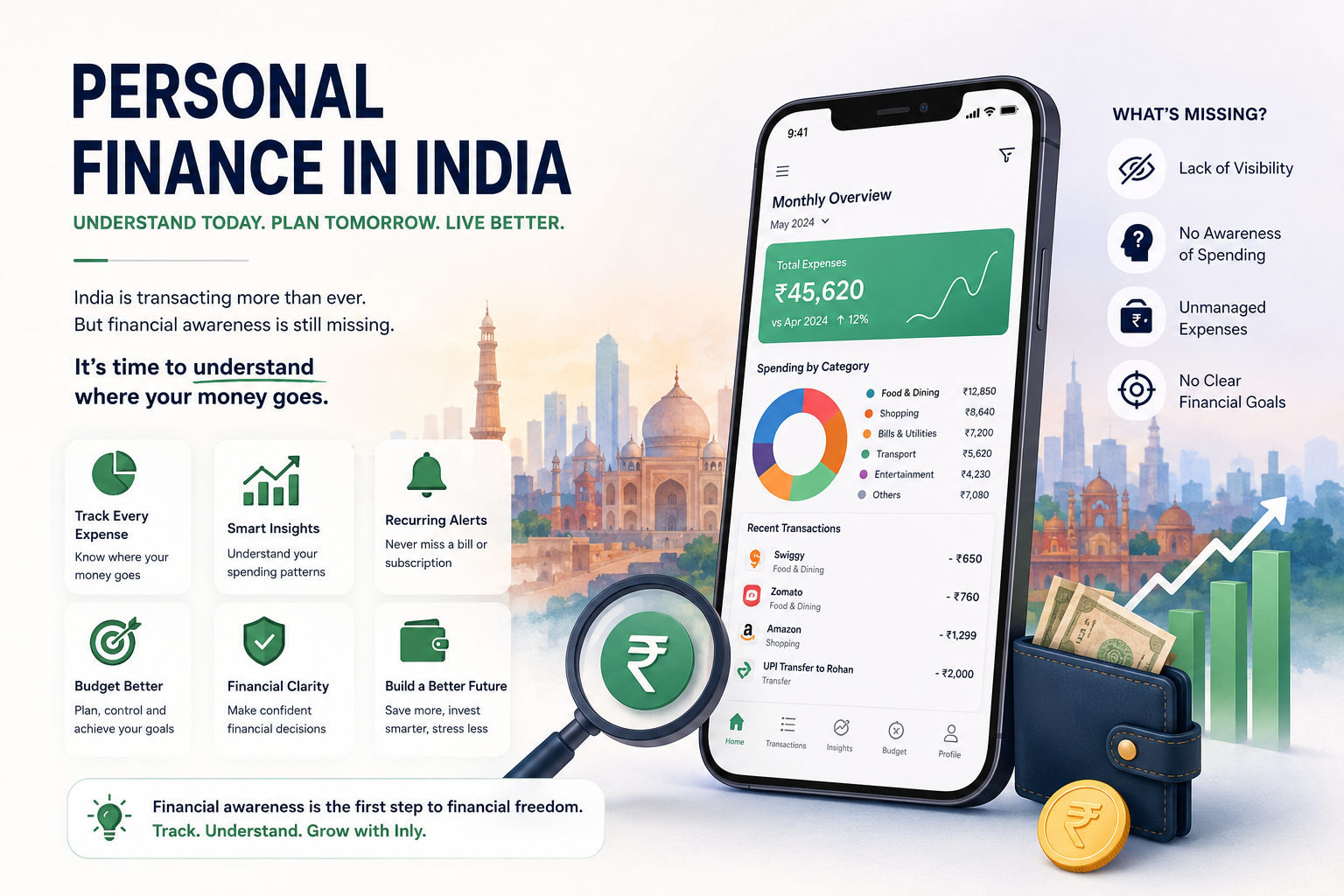
At Inly, we believe that financial awareness is the first step toward financial freedom.
Every day, people receive dozens of transaction alerts from banks, UPI apps, cards, merchants, and service providers. Hidden inside these messages is a complete story of how money is earned, spent, saved, and managed.
Inly transforms these fragmented transactions into meaningful insights.
Instead of manually tracking expenses, users can automatically understand:
- Where their money goes
- How spending changes over time
- Which categories consume the most money
- What recurring expenses exist
- How financial habits evolve
Because the goal isn't simply to spend less. The goal is to understand better.
India made payments easy. Now it's time to make understanding money easy.